The haunting and curse of The Angel of Mist
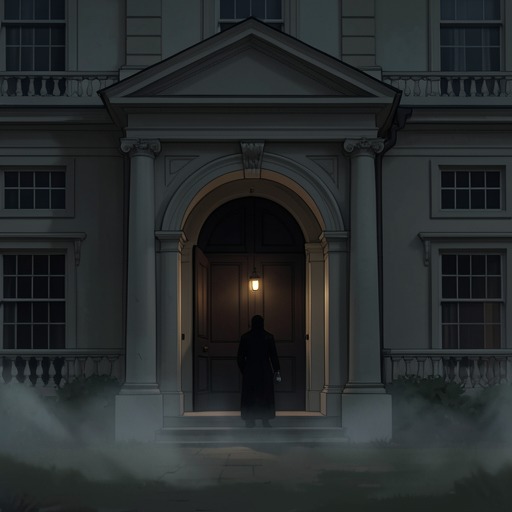
The Shadow of the WindThe haunting and curse of The Angel of Mist is the mansion’s accumulated history of violence, unexplained disturbances, and family secrets. The house first becomes notorious through the tragedy of Salvador Jausa and Marisela; later, the Aldaya family inherits its unsettling atmosphere, and a concealed crypt makes the mansion’s hidden past tangible. Its haunting remains suspended between supernatural legend and human wrongdoing, with the building’s rooms and objects preserving what its occupants would rather leave unexplored.
Origins of the Mansion’s Reputation
The house’s dark reputation predates the Aldayas. After a violent episode at the mansion, the police found bloodstained walls, mutilated angel statues in the garden, and traces of black candles. Their inquiry concluded that Salvador Jausa and his wife had probably been poisoned by Marisela, whose rooms contained bottles of the suspected substance. The investigation also attributed the disorder in the house to her actions, but it could not account for Jausa’s survival and profound subsequent decline. The case was eventually closed, leaving a public record that explained some of the violence while doing nothing to dispel the mansion’s growing legend.
Jausa refused to let the matter rest. He believed Marisela’s spirit remained in the house and said he could sense her presence. To investigate, he enlisted the cinematographer Fructuós Gelabert to film the mansion’s corridors, hoping that the camera might make the invisible visible. The project produced no evidence that could resolve his suspicions. Jausa later vanished during a storm while developing one of Gelabert’s rolls; Don Ricardo Aldaya retrieved the film and burned it after viewing it privately. That destruction left the house with a story no longer open to examination: the supposed haunting endured, while the material that might have complicated or explained it disappeared.
The Aldayas and the House’s Disturbances
After Jausa’s disappearance, Don Ricardo Aldaya acquired the property, and his family moved into the mansion on Avenida del Tibidabo. Their youngest child, Penelope, was born shortly after their arrival. Ricardo renamed the house Villa Penelope, but the name did not last: the mansion seemed to retain an identity that resisted its owners’ attempt to redefine it. Its double basement included a lower crypt, while an upper-floor chapel and a crucifix added to the house’s oppressive, old-world character.
The family and servants reported disturbances across the mansion rather than in a single room. Noises and blows sounded at night; unpleasant smells and cold drafts seemed to travel through the house. In the library, books were mysteriously rearranged or turned backward. An unused third-floor bedroom developed damp marks that appeared to form faces; flowers left there wilted quickly, and the drone of flies could be heard despite the absence of visible insects. These details make the house’s architecture part of the haunting: the crypt conceals a buried history, the library unsettles the order of knowledge, and the unused bedroom turns domestic space into a place of inexplicable decay.
Other incidents extended the pattern into ordinary household life. Sugar disappeared from the pantry, milk reportedly turned red at each new moon, and dead birds or small rodents appeared by some doors. Jewels and buttons went missing, sometimes returning months later in remote corners or in the garden, though many were never recovered. Ricardo dismissed most of the reports as pranks and nonsense, but he took the loss of his wife’s jewelry seriously and dismissed several maids who protested their innocence. The suspicions surrounding those disappearances were also entangled with Ricardo’s reputation for visiting young maids’ bedrooms at night. Thus the mansion’s alleged supernatural disorder coexisted with credible human causes for fear, secrecy, and accusation.
The Crypt and Penelope’s Death
The lower crypt eventually turns the mansion’s atmosphere of hidden history into a concrete discovery. When Daniel and Bea are leaving, Daniel notices that a large sculpted door, which he had previously been unable to open, stands ajar. He goes inside and finds two white coffins on a marble slab, one of them a child’s coffin. Dust obscures the names, so he brushes it from the lid of the larger coffin and reads the inscription: Penelope Aldaya, 1902–1919.
The discovery is not merely another eerie occurrence. It identifies a death concealed inside the family home and gives the mansion’s dark history a human focus. As Daniel retreats, a voice in the darkness tells him to get out; he recognizes it as Laín Coubert. Bea has neither seen nor heard what he encountered, and Daniel hurries her toward the exit without stopping to explain. The scene preserves the haunting’s characteristic uncertainty—the crypt, the voice, and the unseen presence are experienced as real within the moment, while the inscription itself supplies an indisputable fact about Penelope’s fate.
Secrecy, Memory, and the House’s Meaning
The mansion’s reputation is built from both reported phenomena and deliberate concealment. Jausa’s account of Marisela’s presence, the Aldayas’ recurring disturbances, and Daniel’s encounter with Laín Coubert invite supernatural interpretation. At the same time, the police inquiry, the destroyed film, the family’s hidden burial, and the later discovery of Penelope’s coffin connect the house’s mystery to human acts and suppressed knowledge. The novel does not make every disturbance equally verifiable; it lets the house remain a space where rumor, fear, and evidence overlap.
Its rooms give that uncertainty a material form. The crypt holds what the family has buried; the library’s displaced books unsettle orderly memory; the unused bedroom gathers signs that resist explanation. Against those diffuse reports, the inscription on Penelope’s coffin is stark and specific. The mansion’s curse is therefore more than a collection of frightening incidents: it is the persistence of concealed history within a family home, where the past remains present until someone opens the door and reads what has been hidden.